This week at Publitik: the panel now asks what you follow
Interests that become alerts, an alerts centre you can adjust with Martha, password sign-in, a redesigned podcast and a much larger archive. What changed between October 2 and 9.
Between October 2 and 9, the Publitik panel received a larger set of changes than usual. Almost all of them start from the same observation: the publishing market produces far more than anyone can read, and an archive is only as useful as its knowledge of what matters to the person using it.
So this week Publitik started asking. When you open the panel, you choose the topics and publishers you follow, and that choice now guides your alerts, the daily e-mail edition and Martha’s suggestions.
This post gathers what went live on the web version, ordered by its impact on day-to-day use. The changes apply to every plan unless stated otherwise.
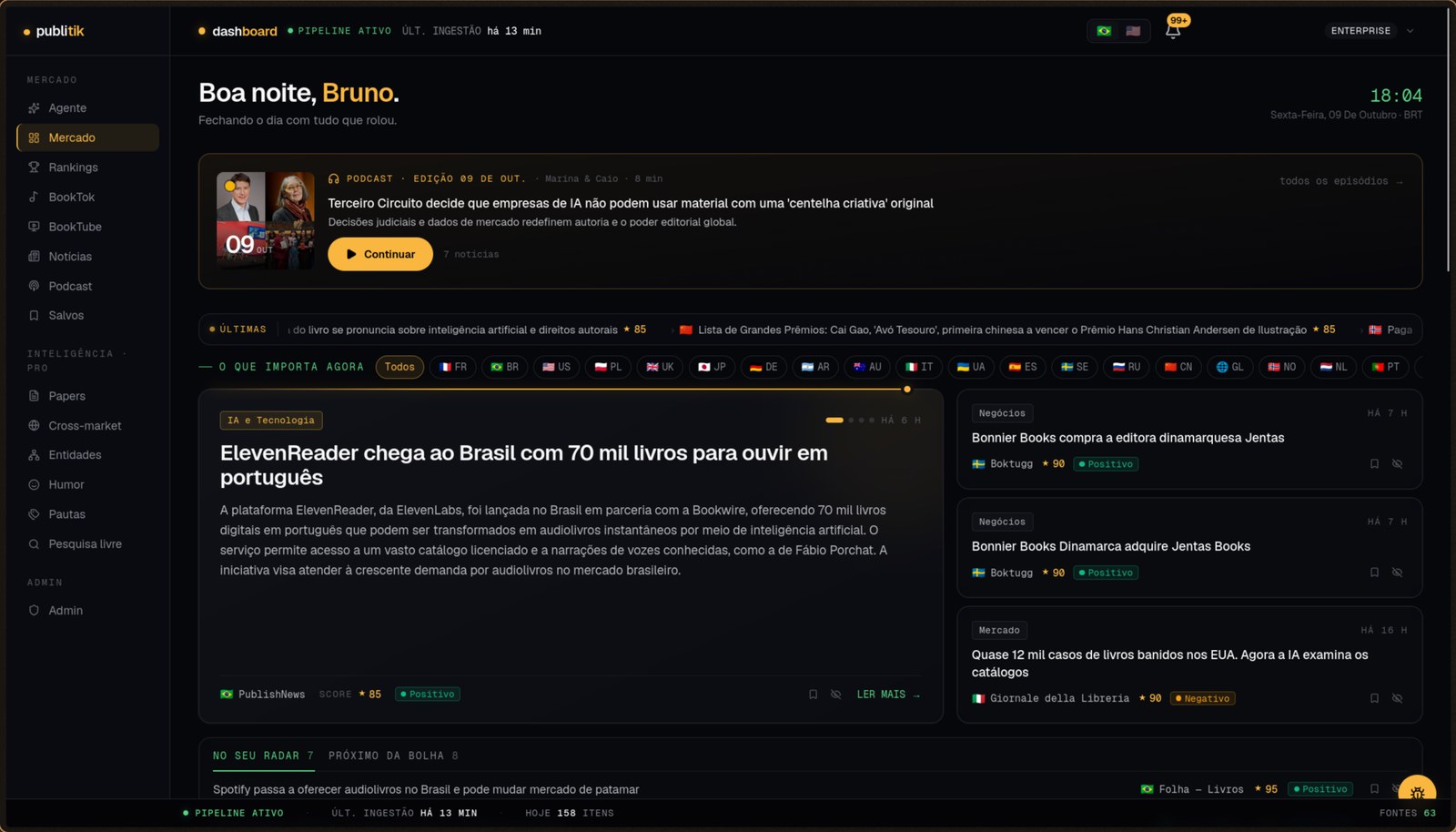
Interests that become alerts
On your first visit, or at any time from your interests, the panel opens a short three-step flow. First, you pick topics and publishers from the most cited this month. As you choose, a column alongside shows how many stories the archive brought on each choice over the last seven days, along with the main headlines, so the decision is made looking at what actually exists.
Next, a free text field takes what you need to follow, in your own words. Martha reads the request and proposes one to four alert rules, each described in plain language, with last week’s volume and two sample headlines. The frequency follows that volume: up to three stories a week arrive right away; above that, in a daily digest. Nothing is created until you confirm.
The last step offers three ready-made questions, built from the alerts you just created. Each one opens Martha with the text already filled in.
Two safeguards are worth mentioning. Topics that are too broad, such as “market” or “sales”, stay out of a rule that already has a specific topic or a name, because they would match almost everything. And a name the archive does not know yet is shown as “not tracked yet”, instead of becoming a rule that never fires.
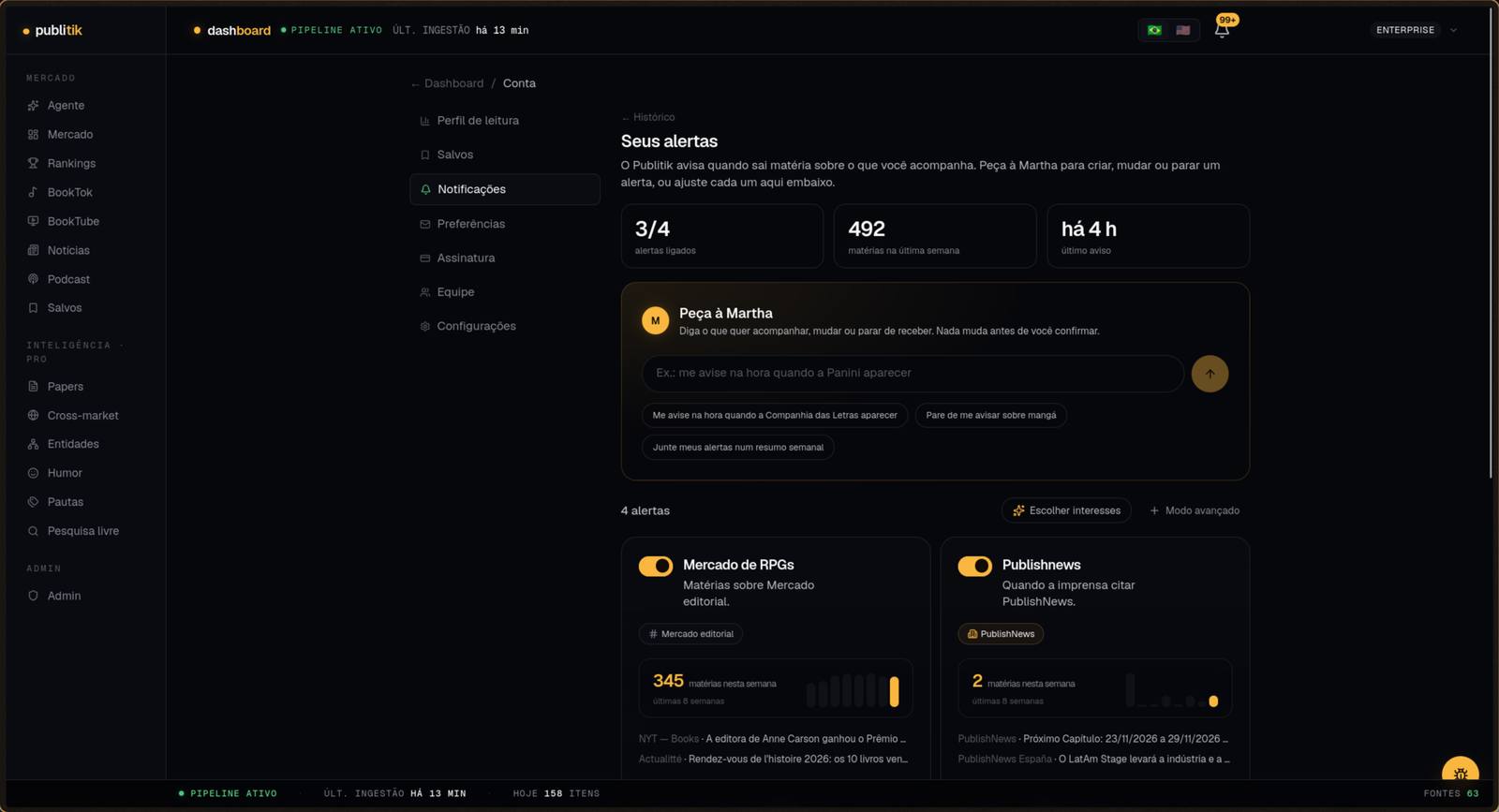
An alerts centre
The rules page is now your alerts centre. At the top, three numbers: active alerts, stories matched last week and the last notice sent. Below, one card per alert: what it does in one sentence, the topics and names it watches, the volume of the last eight weeks as bars, the two most recent headlines, the frequency and the channels.
The biggest change sits at the top of the page. You write what you want to Martha, such as “stop telling me about manga” or “tell me right away when Panini shows up”, and she replies as in a conversation, with the proposed changes as cards: create, adjust, turn off, delete. The server checks every change before showing it (the rule is yours, the topic exists, the name is in the archive), and nothing changes until you confirm. The old form is still available as the advanced mode.
E-mail that knows you
E-mail is the channel that reaches subscribers most. Three changes this week build on that.
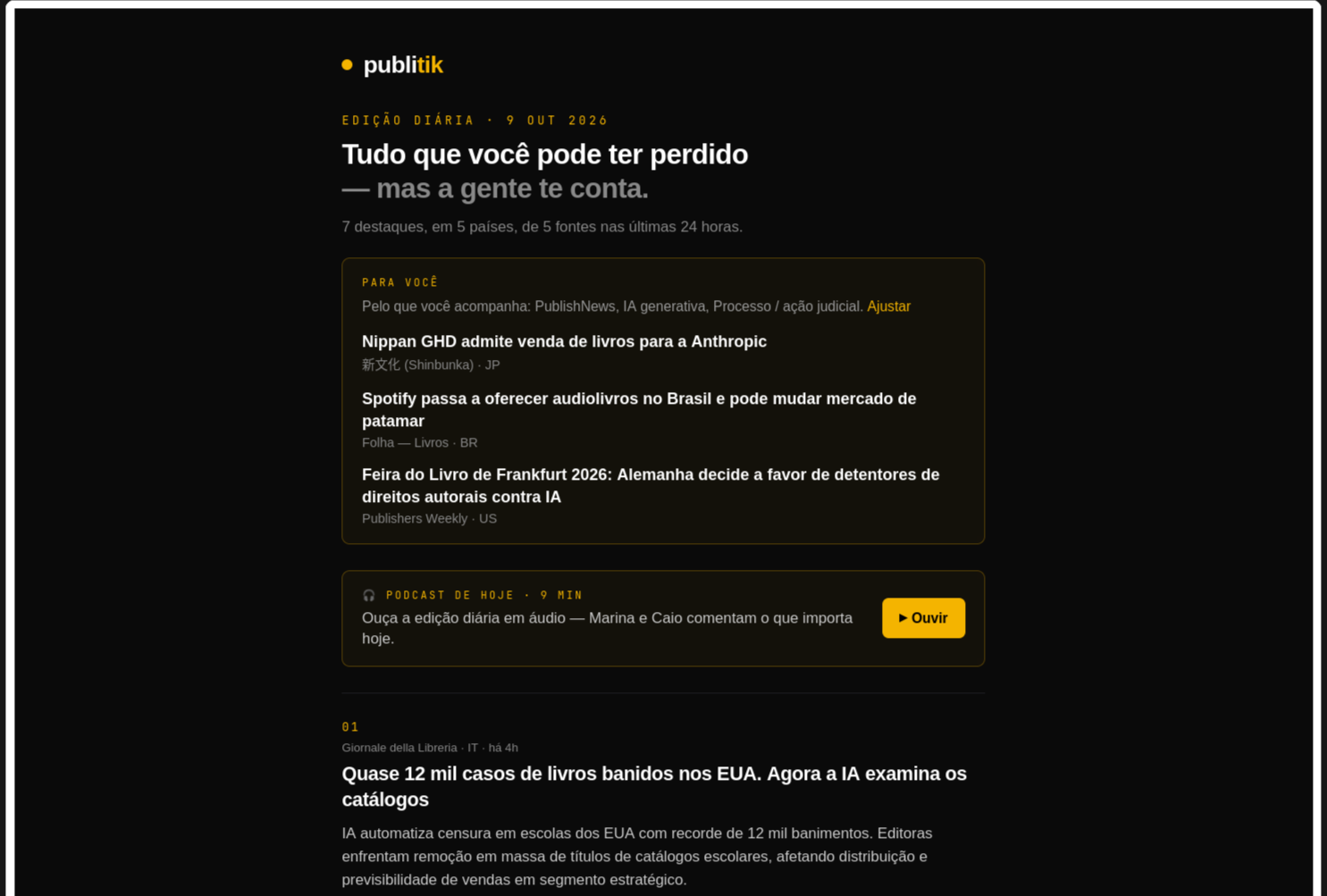
“For you” in the daily edition. The edition is still one for everyone, but each person now gets, at the top, up to three stories from the last 48 hours that match the topics and names of their alerts and what they read most. The block leaves out what the edition already carries and states the reason for each pick. Anyone who has not declared interests gets, in the same spot, an invitation to choose. The first edition with the block went out on October 8.
Your company in the press. For subscribers who signed up with the e-mail of a publisher the archive knows, we created a ready-made alert with mentions of their own house, at the frequency the volume of citations allows. The notice arrived by e-mail with the latest mentions and a link to turn it off if it is not useful.
One-click links. Turning off an alert or following a topic from an e-mail no longer requires signing in to the panel. The link opens a page that shows what will happen and only acts when you confirm, because corporate mail filters open every link in a message. Anyone who has not chosen interests yet receives an e-mail with topics and publishers as one-click chips.
Password sign-in next to the link
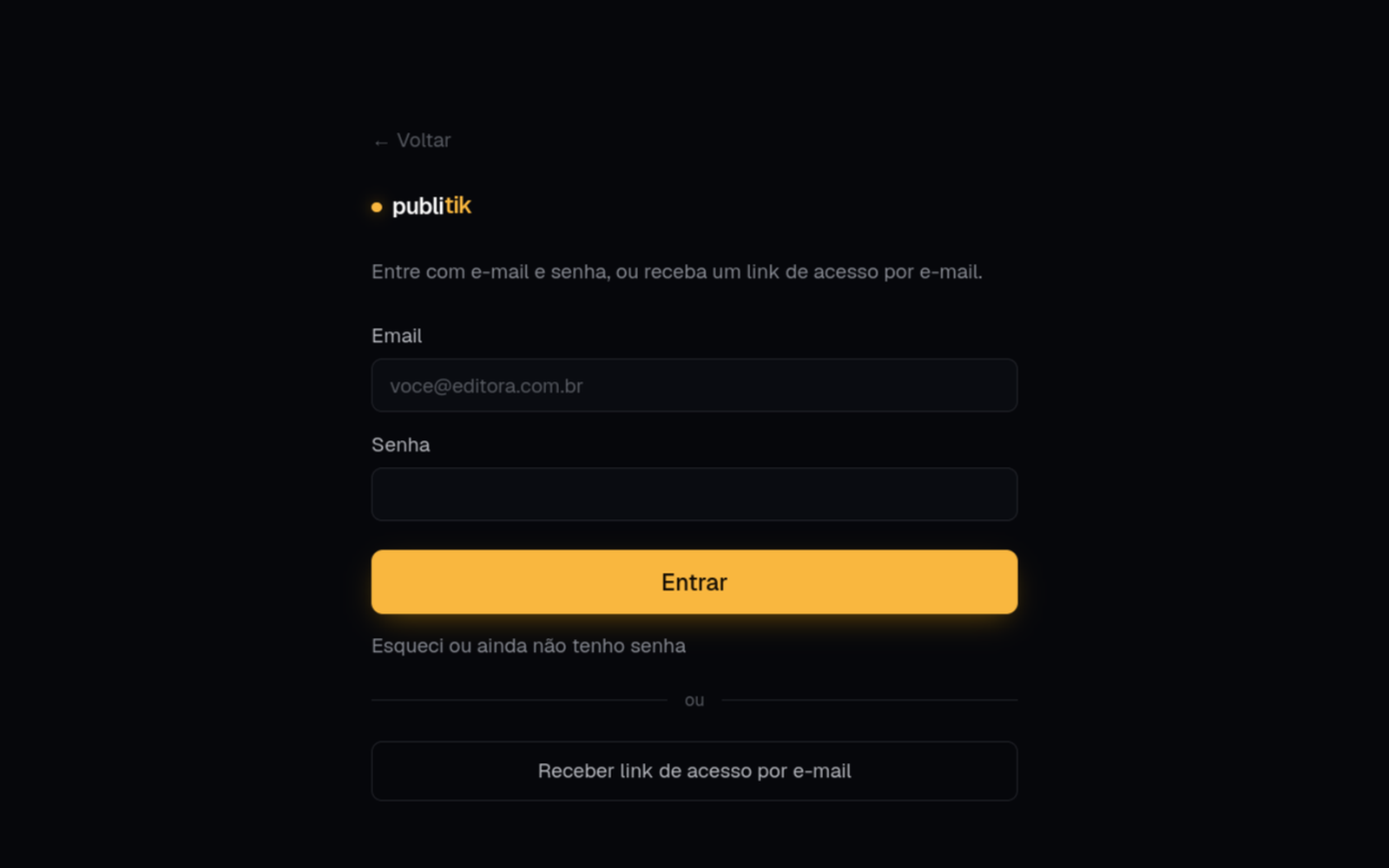
Since October 5, you can sign in to Publitik with e-mail and password. The e-mail sign-in link keeps working for every account. The password is optional, for those who would rather not depend on their inbox every time.
You can create a password in your account settings or through the link sent to all subscribers on Monday. A few safeguards went into the design: the password never travels by e-mail; creating or changing it sends a notice to your inbox; changing it requires the current password and ends your other open sessions; and passwords that are too common, or equal to your own e-mail, are refused.
A new look for the podcast
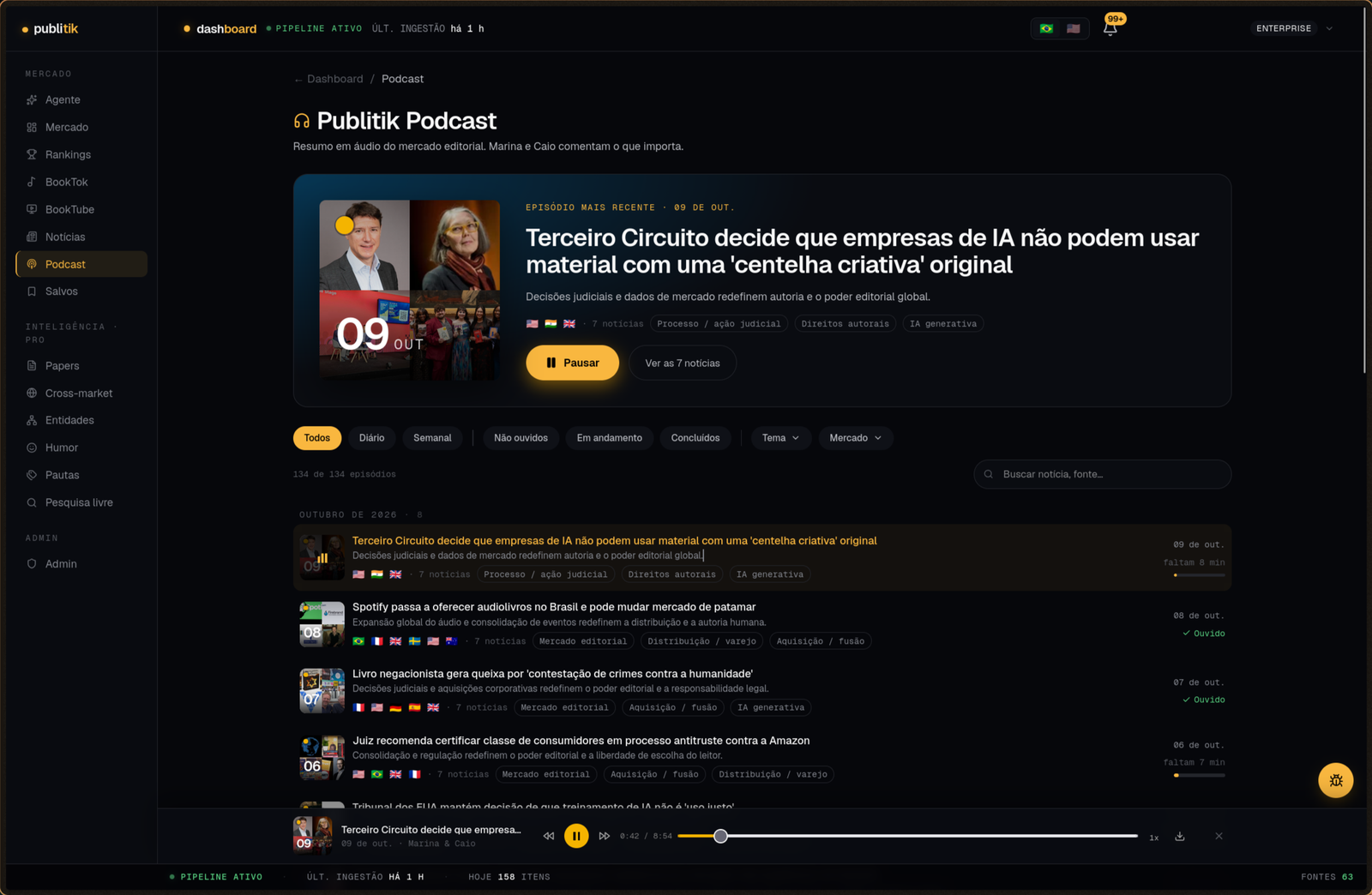
The podcast page has been redesigned. The latest episode opens as the highlight, and the list, grouped by month, can be filtered by edition (daily or weekly), listening status, topic, market and search. Each episode’s cover is a mosaic of the images from the stories it discusses.
The player now follows you around the panel: you can start an episode and keep reading without interrupting the audio, and your position is saved so you can pick up where you left off. A side panel lists the stories in each episode, and clicking one keeps the audio playing. We also fixed the date shown: each edition now displays the day it refers to, not the night before, when it is approved.
A richer book page
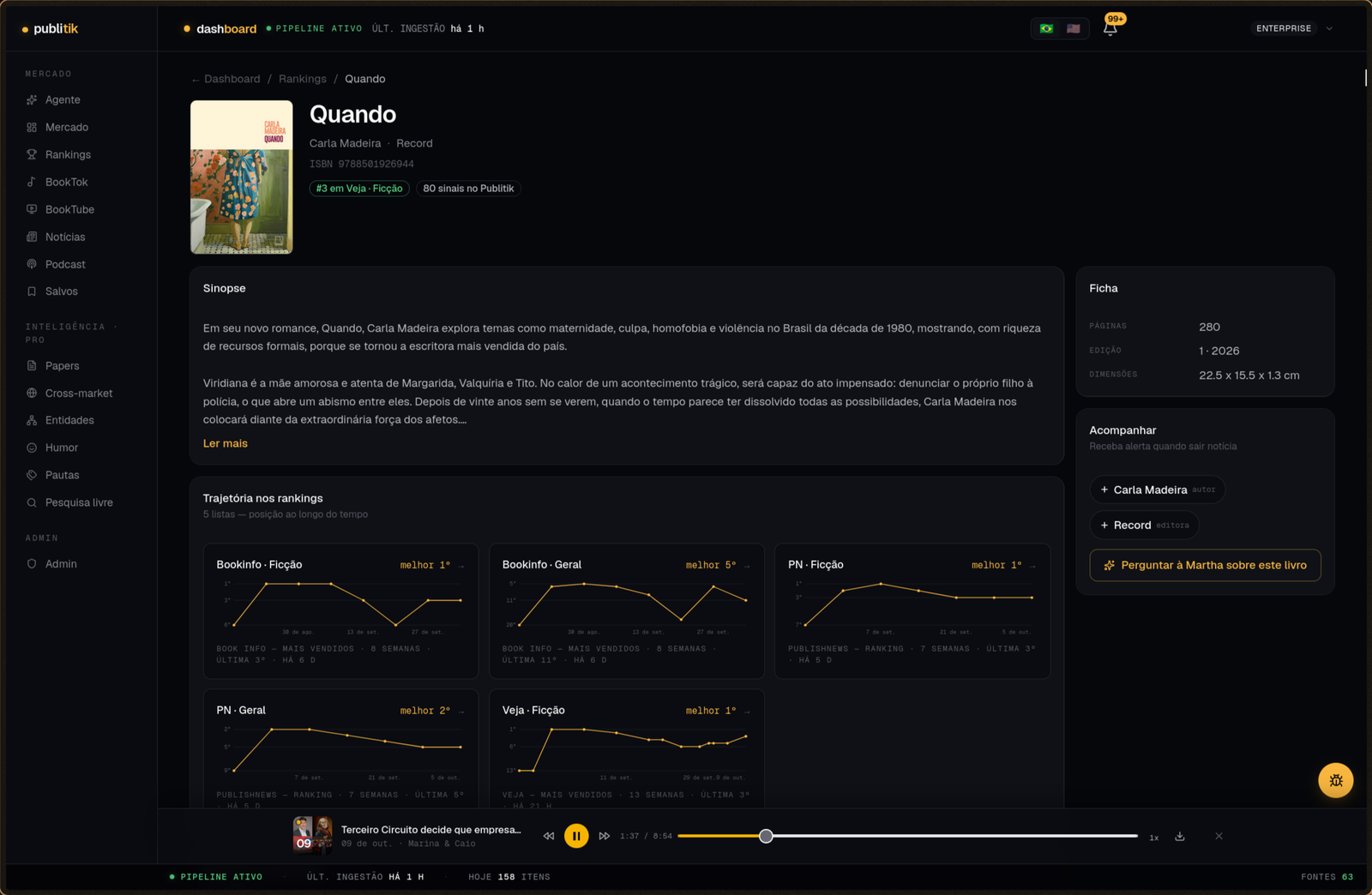
Each book page in the panel now reads the full MVB catalogue record: synopsis, format, publication date, price, translator, illustrator and subject classification. On the same page you can follow the author or the publisher, ask Martha about the title and see, beyond press coverage of the book, recent stories that mention the author and a note about them. Bestseller list positions remain in the right-hand column, with the trajectory as a chart. Any cover on the lists leads there.
What Martha learned
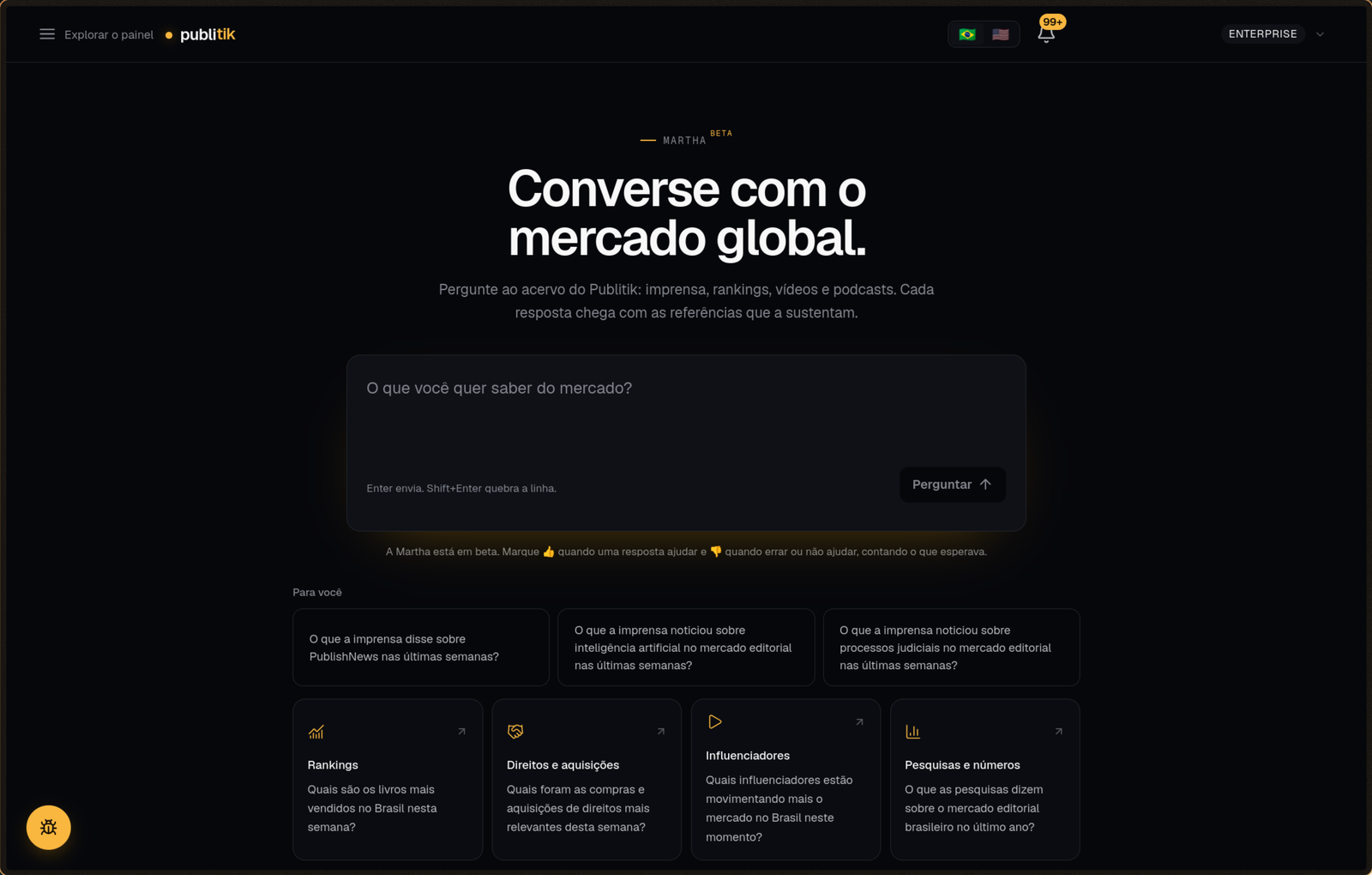
In parallel, Martha received a series of adjustments based on real questions from her first week open to Pro and Enterprise subscribers.
- Questions about the panel itself. “Where do I see stories outside my focus?” or “how do I create an alert?” now get an answer, with a link to the right screen. Before, they were refused as out of scope.
- Scope decided by her, with the archive map at hand. An automatic filter at the entrance refused legitimate questions about the tabletop RPG market, the Asian market and a specific edition of Dorian Gray. The filter is gone. Martha now knows the map of what the archive covers, by topic, niche and country, and decides on her own when a request is out of reach.
- Subscriber memory. In each conversation she takes into account your organisation, your active alerts, the topics you read most and the questions you asked before. This helps her understand a vague or dictated request, never as evidence for the answer.
- “For you” suggestions at the start of the conversation, built from your alerts and what you read.
- Catalogue by publishing group. When counting a publisher’s new titles, she now adds up every imprint in the group and says which ones she counted and which were left out, instead of stopping at the first name.
More data on more markets
The Publitik archive grew this week in markets and niches that still had little coverage. Search, alerts and Martha already answer with this material:
- Portugal now has its own coverage, with market tracking and the quarterly GfK data published by APEL.
- Latin America and Spain, with closer tracking of the Spanish-language market.
- Comics, with more depth in Brazil and the United States.
- Tabletop RPGs and games, a new niche in the topic vocabulary, which you can now choose in an alert and ask Martha about.
- Germany, with more attention to digital publishing.
- Poland, with more history.
Market studies have also moved. Instead of a separate area, reports published by the industry enter the archive with a summary whose figures are checked against the document itself, and appear in the feed like any story. Martha consults them when answering. Studies from CBL and APEL, the Global 50 and the NIQ BookData digital readers survey are already there.
Fixes you may have noticed
- Old alerts on October 3. A reprocessing of the archive made old stories go through the rules again, and part of the subscriber base received alerts that should not have existed. We apologise. Since then, only stories published in the last 72 hours trigger an alert, and each rule notifies only once per story.
- Context algorithm. The algorithm that builds the context of each story has been improved. The effect shows in search, in topic classification and in what Martha can cite when answering.
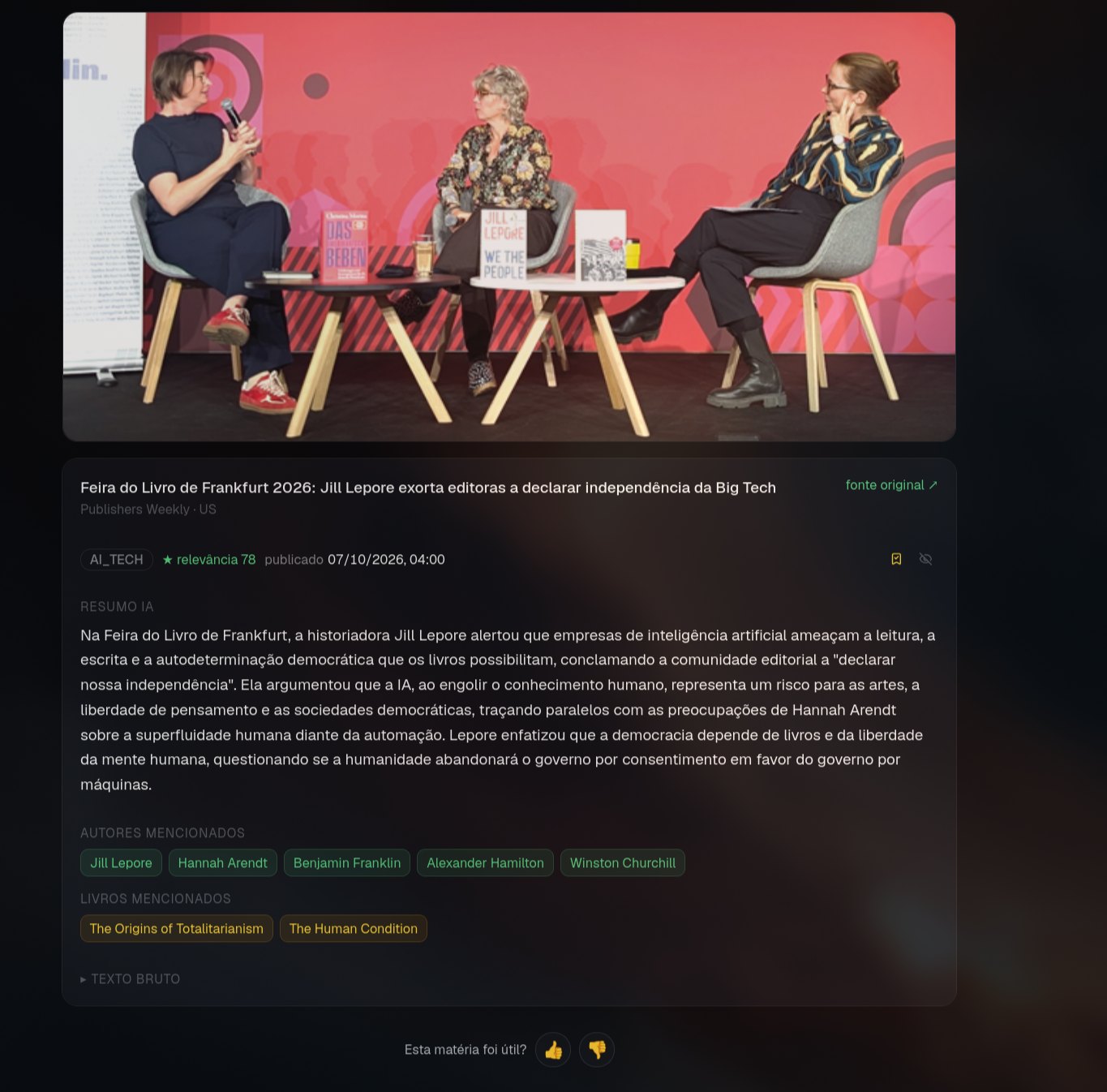
- Image on the story page. Each story page now opens with its featured image, when there is one.
- Typography. A circular reference in the CSS had made some pages fall back to the browser’s default font since April. Fixed.
This blog changed too
Since October 2, the blog has sections (Analysis, Data, Product and Tutorials), topics, filters and full-text search, and it is ready for videos and tutorials. This post starts the habit of gathering, from time to time, what has gone live.
Thank you for supporting Publitik.